What UK importers should expect from Chinese EV brands in 2026.
Distribution structures, homologation realities and the post-tariff economics of Chinese-built passenger and light commercial vehicles.
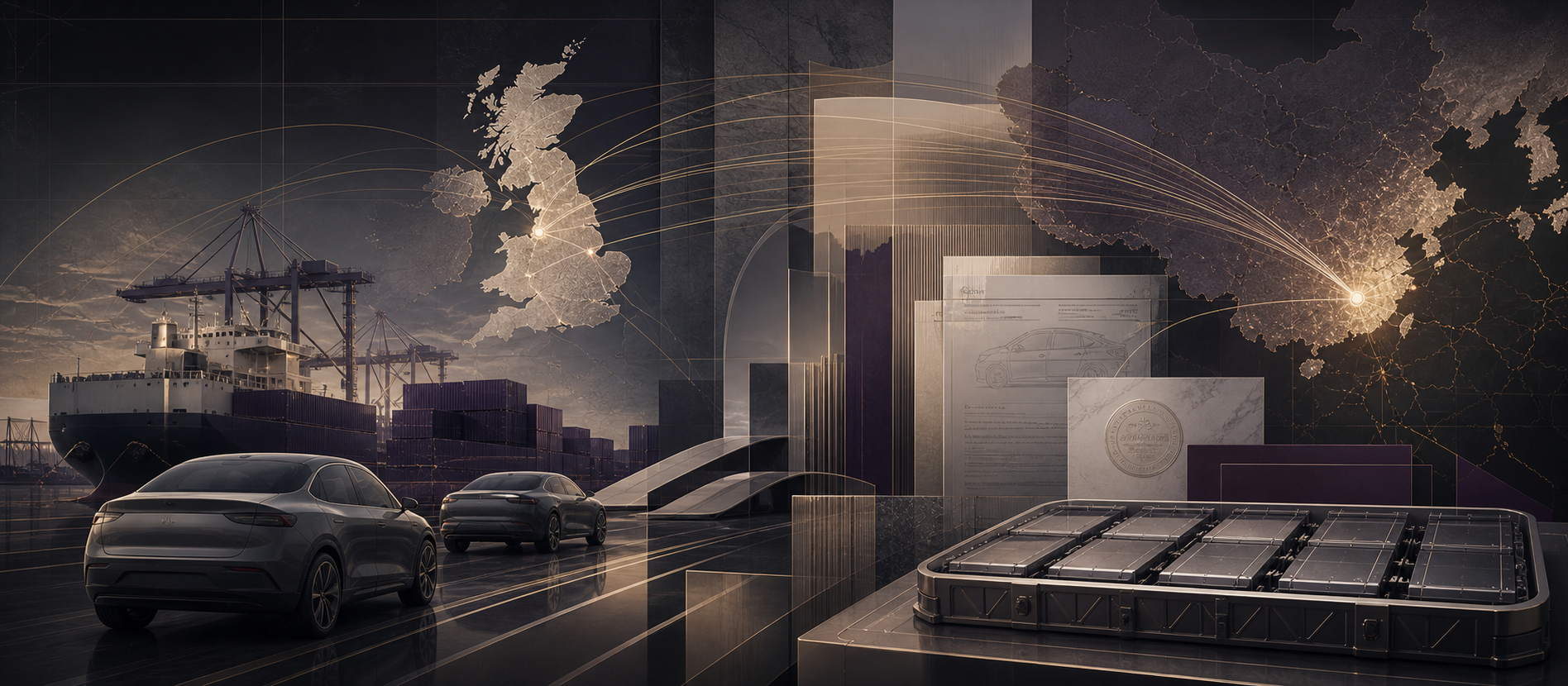
The UK tariff adjustment on Chinese-built vehicles, introduced in late 2025, has not stopped the flow — it has restructured it. The brands that were moving at scale have adapted faster than most observers expected, and a second wave of entrants is now scoping distribution strategies for a market that remains structurally attractive despite the higher duty environment.
For UK importers and fleet operators, the landscape in 2026 looks materially different from twelve months ago. Homologation timelines have shortened. Several brands have invested in UK-based type-approval support. A small number have established wholly-owned import entities, removing the intermediary layer that historically created friction on pricing, warranty and parts availability.
The economics still work, but the margin for error is narrower. At 2024 duty rates, landed cost advantages over European-built equivalents were substantial enough to absorb most distribution and compliance costs. At 2026 rates, that buffer is thinner. Importers who survived the adjustment did so by locking in better logistics terms and investing in local infrastructure early.
Related briefings.
The Gulf corridor advantage: how the UAE became the operational anchor for Europe–Africa trade.
12 min · Trade Strategy
Nigeria's inland shift: what the move from coast to capital means for market entry.
7 min · Emerging Markets
The new Africa–Asia solar corridor: why module sourcing is moving south.
14 min · Trade Strategy